
Lower back pain is an extremely common problem, affecting people of all ages and lifestyles. In fact, it was estimated that 619 million people worldwide were living with low back pain in 2020, making it the leading cause of disability across the globe[1]. If you’ve ever dealt with that persistent ache or sharp twinge in your lower back, you know how it can disrupt work, sleep, and daily life. Naturally, many sufferers are eager to find safe, effective relief beyond pills or invasive procedures. One emerging solution gaining attention is red light therapy (RLT) – a non-invasive treatment using specific wavelengths of light. But does red light therapy really work for lower back pain? In this comprehensive guide, we’ll explore the causes of lower back pain, how red light therapy works, what scientific evidence says about its effectiveness, and how the Nutrofuels™ Red Light Therapy Belt could help you finally find relief.
Illustration of lower back pain. Lower back pain affects most people at least once in their lives and is the number one cause of disability worldwide[1]. It can stem from issues like muscle strains, spinal disc problems, arthritis, or other conditions, leading to pain and stiffness in the lumbar region.
What Causes Lower Back Pain?
Lower back pain (often referred to as lumbago) can have a variety of causes, and understanding them is key to addressing the root of the pain. In about 90% of cases, no specific disease or injury is identified (called non-specific lower back pain)[2][3]. However, several common issues often contribute to those aches and pains in the lumbar region:
- Muscle or Ligament Strain:Sudden movements, heavy lifting, or poor posture can strain the muscles and ligaments in the back. This can lead to microscopic tears and painful spasms[4]. If you’ve ever woken up with a sore back after yard work or felt a tweak during a gym session, a strain could be the culprit.
- Bulging or Herniated Discs:The spine’s discs are cushioning pads between vertebrae. A disc can bulge or rupture (herniate), potentially pressing on nearby nerves and causing pain or sciatica (radiating leg pain)[5]. Not all bulging discs cause pain, but when they do, the nerve compression can be quite intense.
- Arthritis and Degenerative Changes:Osteoarthritis of the spine is common as we age. It causes inflammation and stiffness in the joints of the spine. Arthritis can also lead to spinal stenosis, a narrowing of the space around the spinal cord that puts pressure on nerves[6].
- Osteoporosis:This condition makes bones brittle and weak. In the spine, osteoporosis can cause compression fractures of the vertebrae, resulting in sudden back pain[7].
- Other Causes:There are numerous other contributors to lower back pain. Poor posture and prolonged sitting can strain the lower back over time. Obesity increases stress on the spine. Trauma from falls or accidents can injure tissues in the lower back. On rare occasions, underlying diseases (like kidney issues or tumors) can refer pain to the lower back – these are cases of specific back pain where a distinct cause is identified[2].
Most of the time, lower back pain is a result of multiple factors combining – e.g. a bit of age-related disc degeneration plus a muscle strain from an overzealous weekend tennis match. The pain can range from a dull, persistent ache to sharp, stabbing pain with movement[8]. It might be accompanied by muscle tightness, reduced flexibility, or even nerve symptoms like tingling or numbness if nerves are involved.
Why does it matter? Knowing the cause (even if it’s “non-specific”) helps guide treatment. Traditional care for lower back pain often includes physical therapy exercises, stretching, heat therapy, over-the-counter pain relievers, or in more serious cases, injections or surgery. But recently, many people are exploring red light therapy as an alternative or complementary treatment to target back pain at its source – potentially addressing inflammation and tissue healing in a new way. Let’s delve into what this therapy is all about.
What Is Red Light Therapy?
Red light therapy (RLT) – also known as low-level laser therapy (LLLT) or photobiomodulation therapy (PBMT) – is a treatment that uses specific wavelengths of red and near-infrared light to stimulate biological processes in the body. Unlike high-intensity lasers used in surgery, RLT uses low-intensity, non-heating light. Here’s how it works in a nutshell:
- Penetrating Light:Red and near-infrared light can penetrate the skin and even into the tissues beneath. Red light (around 600–700 nm wavelength) tends to affect surface tissues (skin, just under the skin), while near-infrared light (around 800–850 nm) penetrates deeper into muscles and joints.
- Cellular Energy Boost:When these light wavelengths shine on your cells, they are absorbed by mitochondria (the cell’s “energy factories”). This light energy kicks off increased production of ATP (cellular energy), basically giving your cells more fuel to repair and function optimally[9]. Think of it as charging up your cells’ batteries.
- Improved Circulation and Oxygenation:Red light therapy also triggers the release of nitric oxide, which dilates blood vessels. This improves blood flow to the treated area, bringing in oxygen and nutrients and flushing out waste products. More blood flow can mean faster healing and reduced inflammation.
- Reduced Inflammation:Perhaps most importantly for pain, RLT has been shown to reduce inflammation. It can lower the levels of pro-inflammatory molecules (like certain prostaglandins and cytokines) and increase anti-inflammatory agents in tissues[10]. In the context of lower back pain, which often involves inflamed muscles or joints, this effect can be very beneficial.
- Collagen and Tissue Repair:Red light can stimulate the production of collagen, a protein that helps repair connective tissues. This is one reason RLT is popular in skincare – it can rejuvenate skin – but the same principle can aid in healing ligaments, tendons, or discs in the back by supporting the body’s repair processes.
It’s important to note that RLT is non-invasive and painless. During a typical session, you’ll feel a gentle warmth from the light, but no burning (the wavelengths used do not produce harmful UV radiation or high heat)[11][12]. Treatments usually last around 10–20 minutes on a given area. Devices range from big panels in clinics to smaller at-home devices like light therapy belts or pads.
Overall, red light therapy essentially helps the body do what it naturally does – but faster and more efficiently. By energizing cells and reducing inflammation, it creates an environment that’s favorable for healing and pain relief. But how does this translate to real relief of lower back pain specifically? Let’s look at what the science says.
How Red Light Therapy May Help Lower Back Pain (With Evidence)
When you’re suffering from lower back pain, you ultimately want to know one thing: Will this actually make my pain better? Research on red light therapy for musculoskeletal pain is ongoing, but many studies suggest it can be beneficial for conditions ranging from arthritis to muscle injuries – including lower back pain. Here’s how RLT might help your aching back:
- It Reduces Inflammation and Swelling:Lower back pain often involves inflamed muscles, nerves, or joint tissues. RLT’s anti-inflammatory effect can be a game-changer. By modulating inflammatory chemicals (for example, studies show RLT can lower prostaglandin E2 levels, a marker of inflammation, in people with chronic back pain[10]), red light therapy helps calm the source of pain. Less inflammation can mean less pressure on nerves and reduced pain signals.
- It Eases Pain Signals (Analgesic Effect):Red light therapy has a direct pain-relieving effect, thought to be due to a combination of reduced inflammation and a phenomenon called photomodulation of nerve activity. Essentially, the light can prompt a decrease in oxidative stress in cells and promote release of endorphins, which together can make pain receptors less sensitive. In plain English: RLT can dial down the volume on pain signals.
- It Promotes Tissue Repair:If your back pain is due to a strained muscle or a minor tissue injury, red light may help speed up the healing. The boosted cellular energy (ATP) and increased blood flow bring nutrients needed for repair. Some studies have found that RLT can accelerate regeneration of muscle fibers and even intervertebral disc cells in lab settings. While it’s not a miracle “cure” for something like a severely herniated disc, it might help the surrounding tissues recover and support the spine better.
- It Improves Circulation to Deep Tissues:Unlike a heating pad which mainly warms the surface, near-infrared light (like 850 nm) penetrates several centimeters into the body. This can improve blood circulation in deep back muscles and even around the spine. Better circulation means tight, oxygen-starved muscles in spasm can get more oxygen and relax, and any buildup of metabolic waste that causes soreness can be carried off.
These biological effects sound promising – but what have actual clinical studies shown for back pain? The evidence is somewhat mixed (as is common with emerging therapies), but many reports are positive:
- A 2019 clinical trialcompared red light therapy (using a low-level laser device) versus ultrasound therapy in people with chronic nonspecific low back pain. Both groups also did an exercise program. After 8 weeks, the red light therapy group had greater improvement in pain reduction, lower disability scores, and better range of motion than both the ultrasound group and the exercise-only control group[13]. Notably, only the RLT group saw significant improvement in lumbar flexibility, suggesting it helped reduce stiffness as well.
- A 2021 randomized controlled trialin Brazil (published in the journal Pain) treated 148 chronic low back pain patients with either photobiomodulation (red/infrared light) or a placebo light over 12 sessions (with standard back care education in both groups). The result: there was no significant difference in pain or disability outcomes between the real and sham therapy groups[14]. In other words, in this study RLT did not outperform a placebo for chronic back pain over a 4-week period – a reminder that RLT is not a guaranteed magic bullet for everyone.
- A 2020 systematic reviewof 12 trials on low back pain found that, on average, photobiomodulation therapy did not significantly reduce pain or disability compared to sham treatments[15]. However, the authors noted that the quality of evidence was low, and results varied between studies[16]. Some trials in the review did show benefits, while others did not, leading to an overall inconclusive result. The review suggested that future high-quality studies (and finding optimal treatment parameters) are needed.
- Numerous other studies on related musculoskeletal conditions have shown benefits of RLT for pain relief. For example, research on knee arthritis, neck pain, and fibromyalgia have found clinically significant pain reductionswith red/infrared light therapy[17]. The mechanisms in those conditions (reducing inflammation, improving tissue repair) are very much applicable to back pain as well. In fact, an up-to-date review in 2022 concluded that photobiomodulation is a non-invasive, safe, drug-free method for relieving pain in both acute and chronic musculoskeletal conditions[18].
Bottom line: The scientific evidence suggests red light therapy can help reduce lower back pain for many people, though results can vary. It seems particularly effective when used in combination with other therapies (like exercise or physical therapy) as part of a holistic treatment plan[13]. It’s not a one-and-done miracle cure – you typically need a series of treatments and some patience – but given its safety profile, it’s a very attractive option to try, especially before resorting to more invasive measures.
In the next sections, we’ll compare red light therapy to other common back pain treatments and discuss what kind of results and timeline you can expect. Then we’ll introduce a convenient way to use red light therapy at home: the Nutrofuels™ Red Light Therapy Belt, designed with lower back pain relief in mind.
Red Light Therapy vs. Other Back Pain Treatments
How does red light therapy stack up against the more “traditional” ways of tackling lower back pain? Let’s compare it on a few key points:
- Invasiveness & Side Effects:Most conventional treatments for back pain either involve medications or physical interventions. Pain medications (like NSAIDs or muscle relaxants) can offer quick relief but often come with side effects – for example, long-term NSAID use can irritate the stomach, and opioids can cause sedation, dependence, and other serious issues[19]. Cortisone injections can help reduce inflammation but are invasive and not without risks. Surgery is a last resort, with significant risks and recovery time. Red light therapy, by contrast, is completely non-invasive and drug-free. There’s no ingestion or injection of substances – just light. Side effects are minimal; it doesn’t damage the skin and does not produce harmful UV rays, so there’s no cancer risk or sunburn concern[20]. RLT is generally considered very safe for regular use, with virtually no reports of serious adverse effects in studies[11]. (You should still follow device guidelines – e.g. don’t shine it in your eyes, more on safety later – but overall it’s low risk.)
- Addressing the Root Cause vs. Symptom:Back pain often has underlying causes like muscle weakness, poor posture, or degenerative changes. Exercise and physical therapy aim to correct those underlying issues by strengthening the core, improving flexibility, and teaching proper biomechanics – which is excellent for long-term improvement. However, exercise can be slow to relieve pain and hard to do when you’re in pain. Pain medications, on the other hand, mostly mask symptoms – they reduce the sensation of pain but don’t heal the underlying tissue. Red light therapy hits a sweet spot: it actually works on a biological level to enhance tissue healing and reduce inflammation at the source, addressing the root issues to an extent (e.g. helping a strained muscle fiber repair faster or calming an inflamed joint). It’s a therapy that encourages your body to heal rather than just numbing the pain. Of course, RLT won’t rebuild a collapsed disc or instantly strengthen weak muscles, so for best results you’d use it alongside physical therapy or exercise – relieving pain to make it easier to do those core-strengthening exercises, for instance.
- Convenience & Cost:Consider the time and money aspects. Physical therapy sessions require appointments 1-3 times per week, possibly costly co-pays or fees, and you have to do prescribed exercises daily on your own. Chiropractic or massage can help, but again require frequent visits and costs can add up. Many people with chronic back pain end up spending a lot on various treatments (massage, acupuncture, special chairs, etc.). Surgery, of course, is extremely expensive and involves downtime from work. In comparison, once you have an at-home red light therapy device, you can use it conveniently in your own home, on your schedule. The Nutrofuels belt, for example, can be used while you relax on the couch or even while doing light chores – truly hands-free therapy. Over time, this can be highly cost-effective. A series of RLT sessions can provide long-lasting benefits at a fraction of the cost of repeated clinic treatments[21]. And there’s no downtime; you can use the light and go about your day normally.
- Speed of Relief:Many traditional remedies provide some quick relief – for example, a heating pad or hot shower often eases back muscle tension temporarily, and a dose of ibuprofen might dull the pain for a few hours. Red light therapy is a bit different: it’s not usually an immediate pain-killer in one session (though some people do feel a bit of relief and relaxation right after treatment[22]). Instead, it’s cumulative – the anti-inflammatory and tissue-healing effects build up over several treatments. This means you have to be consistent (daily or near-daily use for a few weeks) to really notice the big differences. We’ll talk about timeline next, but keep in mind RLT is more about improving the condition rather than just momentarily blocking pain signals. That said, many users report that after a couple of weeks, they suddenly realize they’re moving with less pain or sleeping better because the therapy has been working in the background to resolve the issue rather than just cover it up.
In summary, red light therapy offers a unique combination of benefits for back pain sufferers: it’s safe, non-invasive, and addresses the cellular causes of pain (inflammation and tissue damage) rather than just the symptoms. It can easily complement other treatments – for example, using the RLT belt to warm up and ease your back before a stretching session, or using it at night to calm inflammation and improve recovery while you sleep.
Of course, managing back pain often requires a multi-faceted approach (exercise, good ergonomics, weight management, etc. all play a role in long-term relief). Red light therapy is one more tool – but a powerful and user-friendly one – to add to your pain relief toolkit.
What to Expect: Timeline, Safety, and Results
If you’re considering trying red light therapy for your lower back pain, you likely have questions about how quickly it works, whether it’s safe to use regularly, and what kind of outcomes you might see. Let’s break down those expectations:
Timeline: How Soon Will You See Relief?
Patience is key with red light therapy, but improvements can sneak up on you sooner than you think. Everyone’s body and condition are different, but here’s a general timeline of what to expect:
- Immediate After Sessions:During or right after a 10–20 minute RLT session, you’ll likely feel soothing warmth in your lower back (the device gently warms the area, which itself can relax tense muscles). Many users report feeling a bit of relaxation and pain easing immediately due to the warmth and increased circulation[22]. Don’t be surprised if your back feels looser right after a treatment, but note this might be a temporary sensation initially.
- First 1–2 Weeks:In the first couple of weeks of consistent use (say, once daily or at least 3-4 times a week), the main changes are happening behind the scenes. You’re charging up cells, reducing some inflammation, and helping your body repair. You may start to notice slight improvements in stiffness and a general trend toward less pain – for instance, maybe you can bend a little further or you wake up feeling not quite as sore as usual. Some people with muscle-dominant pain feel significant relief in this phase, while those with chronic conditions might notice only minor changes so early.
- Weeks 3–4:After several weeks, the cumulative effects usually become more noticeable. Studies and clinical experience suggest that by 4 weeks of regular RLT, people with chronic low back pain often report meaningful reductions in pain and disability scores compared to baseline[14] (though, as noted earlier, one high-quality study found similar improvements in a placebo group, indicating the importance of realistic expectations). You might find you’re taking fewer painkillers or you’re more able to get through your workday without that mid-afternoon backache flare-up.
- Weeks 5–8:This is often the period of visible transformation for many users. By 6-8 weeks of consistent treatment, there’s been substantial cellular repair and reduction in chronic inflammation. Many individuals report that chronic pain has significantly subsided, allowing them to resume activities they avoided before. Clinical guidelines for photobiomodulation indicate that optimal results for chronic conditions typically develop over 4–8 weeks of regular use[23]. So if you stick with it, the 2-month mark is a great time to assess your progress – you may be pleasantly surprised at how far you’ve come.
- Long Term (8+ weeks):Once you’ve achieved relief (say your pain is down to a very manageable level or gone), you can move into a maintenance mode. This might involve using the RLT belt a few times a week or whenever you feel you need a boost (after a strenuous activity, for example). Many users keep the device as part of their wellness routine to help prevent flare-ups – much like doing regular exercise or stretching to keep the back strong[24]. The Nutrofuels belt is safe for daily use long-term, so there’s no harm in continuing regularly if it keeps you feeling good.
Keep in mind individual timelines vary. Acute back injuries (like a mild muscle strain) may heal much faster – RLT might cut days off your recovery time. Chronic conditions might require ongoing therapy for sustained relief. The key takeaway: consistent use is crucial. You generally won’t get lasting relief from a single short session; it’s the cumulative effect of many sessions that provides the real benefits.
Safety: Is Red Light Therapy Safe for Back Pain?
Yes – red light therapy is widely regarded as a very safe modality, especially when used as directed. Here are some safety considerations and why the Nutrofuels™ Red Light Belt is a trustworthy option:
- No Harmful Radiation:RLT devices use red and near-infrared light, which do not include ultraviolet (UV) rays. This means there’s no risk of skin damage or increased skin cancer risk (unlike tanning beds or excessive sun, which are UV sources). The wavelengths (around 660 nm and 850 nm) have established safety profiles from decades of research[20].
- No Significant Heat:The Nutrofuels belt is designed with advanced LEDs that operate at safe temperatures. You’ll feel gentle warmth, but the device won’t overheat or burn you. It even has a built-in auto shut-off timer to prevent overuse in one spot[25]. Many common concerns with light-based devices – like getting too hot – are mitigated by these safety features[12].
- Non-Invasive & Drug-Free:There’s no injections, no incisions, and no chemicals. This means you avoid the side effect profiles of medications (no drowsiness, no stomach upset, etc.) and the complications of invasive procedures. Red light simply stimulates your body’s natural processes.
- Minimal Side Effects:The vast majority of users experience no adverse effects from red light therapy. A few people might notice temporary mild redness of the skin or a slight warmth for an hour after treatment – similar to how the skin can be a bit flushed after a heating pad, but far less intense. There are no known serious side effects when used properly. It’s safe for people of all skin types and tones (it doesn’t cause pigmentation changes).
- Precautions:While safe for almost everyone, a few sensible precautions: Avoid shining the light directly in your eyes. If you’re treating your back, this is easy since the lights face your skin – just don’t stare into the LEDs. (If you use it near the neck or other areas, you might use the provided eye protection or simply keep eyes closed.) The Nutrofuels belt’s bright LEDs should not be used on the face or eyes. Also, if you have a condition called photosensitivity (where your skin is abnormally sensitive to light, perhaps from a medication or illness), consult a doctor before use. Not recommended during pregnancy: Out of an abundance of caution, it’s generally advised that pregnant women avoid non-essential treatments on the abdominal/lower back area[26] – mainly because it hasn’t been specifically studied in pregnancy. Always check with your healthcare provider if you’re unsure.
- Quality and Testing:One safety factor is using a well-made device. The Nutrofuels™ Red Light Belt uses clinically tested wavelengths and is a professional-grade device (105 LED lights delivering the precise red/NIR wavelengths)[27]. It has been engineered with safety in mind (for example, maintaining operating temperatures below body temperature[25]). Using a reputable product ensures you’re getting the right dose of light without any electrical or manufacturing hazards.
In short, red light therapy is about as safe as it gets in the realm of pain treatments. There’s no harm in trying it, which is a big contrast to, say, taking high-dose painkillers or getting an epidural injection, which carry significant risks. The main “warning” you’ll see is that you shouldn’t expect overnight miracles – but from a safety perspective, you can feel confident using an RLT belt as instructed to help with your back pain.
Results: What Benefits Can You Achieve?
When used consistently, what kind of benefits might you expect from red light therapy for your lower back pain? Based on user reports and clinical observations, you could experience several positive outcomes:
- Reduction in Pain and Stiffness:This is the number one goal, of course. Over a few weeks, many people find their everyday pain levels go down. That chronic ache might shrink from an 8/10 pain to a 3/10, for example, or that sharp pinch on bending might ease up. You may notice it especially in the morning (less stiffness getting out of bed) or after long periods of sitting (less need to stretch constantly).
- Improved Mobility and Function:As pain decreases and tissues heal, you’ll likely find you can move more freely. Maybe you can touch your toes again, or lift groceries without fear. Clinical studies have shown improvements in disability scores – meaning people can do daily tasks more easily – with RLT treatments[13]. You might regain the ability to exercise or play with your kids without your back “paying for it” later.
- Less Inflammation and Flare-Ups:If you suffer from episodic flare-ups of back pain (where every so often it “goes out”), regular RLT might reduce the frequency or severity of these episodes. By keeping inflammation at bay and promoting stronger, healthier muscle tissue, your back becomes more resilient. Some users with chronic conditions (like degenerative disc disease or arthritis) report that ongoing red light therapy helps keep their baseline inflammation low, so they experience longer pain-free periods.
- Better Posture and Muscle Relaxation:As the therapy increases circulation, it often helps tight muscles relax. If muscle spasm is part of your pain, RLT can break that pain-spasm-pain cycle by easing the tension. You may find your posture improves unconsciously because those muscles aren’t as guarded and tight. Many people describe a soothing, therapeutic warmth during treatment that leads to overall relaxation of the back muscles.
- Enhanced Healing if Injury is Involved:If your back pain started with an injury (like “I pulled something while lifting a heavy box”), red light therapy can potentially shorten the healing time. It supports the repair of muscle fibers or connective tissue. So instead of a strain taking 4 weeks to fully heal, maybe you’re back to normal in 2-3 weeks. This can be a bit hard to quantify, but you might notice “Hey, I bounced back faster than usual.”
- Reduced Reliance on Medications:Over time, as your pain lessens, you might find you’re reaching for the ibuprofen bottle far less, or you’ve avoided having to discuss more drastic measures like opioids or injections with your doctor. That’s a huge win – relieving pain while avoiding drug side effects and risks.
It’s worth noting that results can differ based on what’s causing your back pain. For example, someone with muscle-dominant pain or mild disc issues might get dramatic relief, whereas someone with severe spinal arthritis might get moderate relief but still have some residual pain (they might need to combine RLT with other interventions for maximum relief). Setting realistic goals is wise – aim for improvement, not necessarily perfection. In many cases, people are happy to get, say, a 50% reduction in pain and a big boost in quality of life. Often that’s enough to go from “I can’t garden or golf because of my back” to “I can do these activities again in moderation.”
By this point, you’re probably interested in giving red light therapy a try for yourself. One of the easiest ways to do that is with a wearable red light therapy belt that you can use at home. Let’s take a closer look at why the Nutrofuels™ Red Light Therapy Belt is an excellent choice designed with back pain relief in mind.
Why Nutrofuels™ Red Light Therapy Belt Is Designed for Back Pain
Not all red light devices are created equal. The Nutrofuels™ Red Light Therapy Belt stands out as a high-quality, user-friendly option – especially suitable for targeting lower back pain. Here are some of the features and benefits that make this belt a great investment in your back health:
- Dual-Wavelength Technology (660 nm + 850 nm):The Nutrofuels belt uses a combination of 660 nm red light and 850 nm near-infrared light. Why does this matter? The red 660 nm targets the surface tissues and skin (great for any superficial healing and also gives a bit of pleasant warmth), while the 850 nm NIR light penetrates deeper into your back muscles and spine area. This dual approach means multiple layers of tissue get therapeutic light. Many cheap gadgets use only one wavelength; Nutrofuels uses the proven combo that research has shown to be most effective for pain and healing[20].
- High-Powered, Full Coverage LEDs:This belt isn’t skimpy on light output. It contains 105 professional-grade LED lights, arranged over a large flexible pad that is about 54.5 cm by 18 cm in size[27]. In practical terms, that means it covers a broad area of your lower back (or abdomen) in one session. The LED matrix is dense and even, ensuring there are no “dead zones” – your entire target area gets an even dose of red and infrared light. With 105 LEDs (63 red light chips + 42 NIR chips)[27], this device delivers clinical-level irradiance (power), which is needed to achieve results. Many low-end belts might only have a few LEDs and low power, which might not deliver enough energy to your tissues. Nutrofuels’ belt is built to professional specs, so you get a sufficient dose in each session.
- Contoured, Comfortable Design:The Nutrofuels belt is designed to be worn comfortably around your midsection. It’s adjustable up to a 51" waist[28] with a flexible neoprene wrap, so it can accommodate different body sizes and shapes (including those with larger waists or postpartum bellies). The belt wraps snugly, ensuring the LEDs press gently against your lower back for good light contact. This contoured fit is important – consistent contact means consistent results. Plus, it’s lightweight and padded, so you can wear it without discomfort. You can still move around – many users wear it while doing chores, checking emails, or relaxing. It’s truly a hands-free therapy
- Customizable Intensity and Timer Settings:Everyone’s comfort level and needs are different, so the Nutrofuels belt gives you control. It offers 5 brightness levels – you can start with a gentle intensity and work up to the maximum therapeutic dose as you get used to it[29]. It also has 7 timer settings (ranging from 5, 10, 15, 20, 25, up to 30 minutes) with an auto shut-off[30]. This means you can set your session length and not worry about watching the clock – the device will turn off when the time’s up, preventing any risk of overdoing a session. For back pain, a common routine might be 15-20 minutes per session on a high brightness setting, once a day. The device makes it easy to achieve that consistently.
- Advanced Pulse Frequency Feature:Unique to some high-end devices, the Nutrofuels belt includes frequency settings (10 Hz and 40 Hz pulsing)[31]. Pulsing the light at certain frequencies is thought by some researchers to enhance cellular response. At 10 Hz or 40 Hz, the light is turning on and off rapidly (you won’t really perceive the flicker), which might stimulate cells in a slightly different way. While the science on pulsing vs. continuous light is still evolving, it’s a bonus feature for those who want to experiment with the most advanced photobiomodulation techniques. You have the option to use steady or pulsed modes as you prefer.
- Portability and Convenience:The Nutrofuels belt comes with a standard wall AC adapter, but it’s also USB power bank compatible[32]. This means you can power it with a portable battery pack – you could literally wear it and go for a walk, or use it outdoors, or wherever without being tied to an outlet. Traveling and want to keep up your therapy routine? No problem – toss the belt and a slim USB battery in your bag. The device is sleek and doesn’t take up much space, so it’s easy to integrate into your life.
- Multi-Purpose Use:While our focus here is on lower back pain, it’s worth mentioning that this belt can be used on other body parts too. Because it’s a flexible wrap, you can apply it to your upper back, abdomen, hips, or even thighs if needed. For example, some users also use it on the belly for digestive wellness or on the midsection for skin health (the belt was originally designed with postpartum skin tightening in mind, after all). Red light therapy has broad benefits – reduced muscle soreness, improved circulation, skin rejuvenation – so you’re getting a versatile wellness tool, not just a “back gadget.”
- Quality Assurance and Guarantee:Nutrofuels stands by their product with a 90-Day Money-Back Guarantee[33]. This shows the confidence in the results. Essentially, you can try the belt for three months and see the transformation in your pain and perhaps even your skin’s firmness (if used on the abdomen). If you’re not satisfied, they’ll refund you – no hassle. Few products have that kind of guarantee, and it underscores that the company has seen this device work for thousands of customers already[34]. There’s also typically a manufacturer’s warranty on the device itself, ensuring it’s free from defects. When investing in a health device, that peace of mind matters.
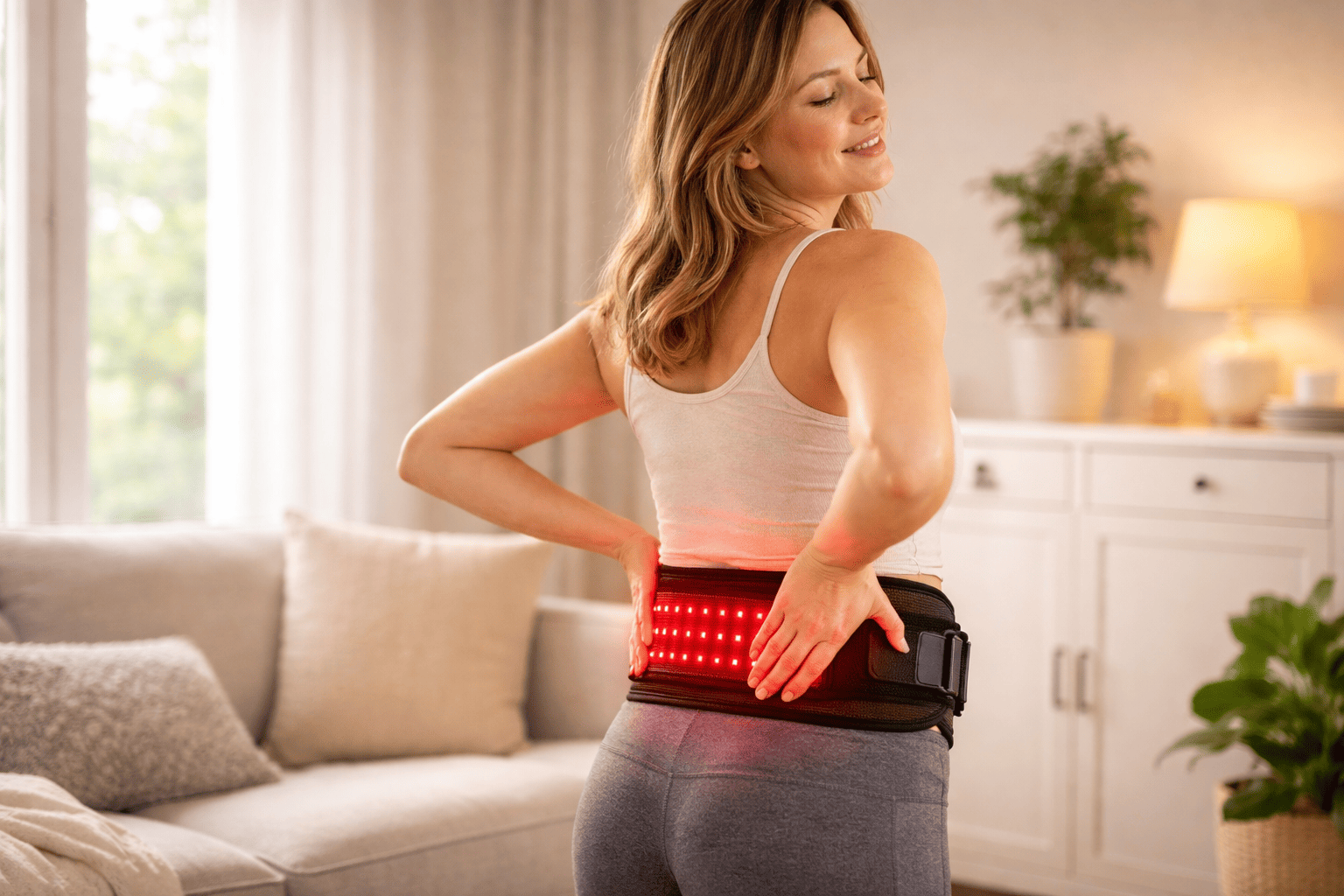
The Nutrofuels™ Red Light Therapy Belt in use on the midsection. The belt’s array of red LEDs delivers therapeutic red and near-infrared light to the targeted area (such as the lower back) to help reduce pain and inflammation. The flexible, adjustable belt design allows for comfortable, hands-free treatment while sitting, standing, or moving around.
In summary, the Nutrofuels Red Light Therapy Belt brings together professional-grade light therapy technology in a convenient at-home format. It’s designed not only to improve your lower back pain but to do so safely, comfortably, and efficiently. Instead of juggling clinic appointments or messy topical treatments, you can simply wrap this belt around your waist, relax for 20 minutes, and let science-backed light therapy do its work.
Countless users have incorporated this belt into their daily routine and report not just less pain, but also improvements in their overall wellness – from better sleep (since they’re not in pain at night) to being able to exercise more freely. And when you consider the cost of doctor visits, pain meds, or other gadgets, investing in a high-quality device like this can actually save money in the long run while giving you control over your pain management.
Next, we’ll address some frequently asked questions about using red light therapy for lower back pain and the Nutrofuels belt specifically. After that, if you’re ready to take the next step, we’ll guide you on how to get your own belt and start your journey to a pain-free back.
FAQs: Red Light Therapy for Lower Back Pain
Q1. Does red light therapy really work for lower back pain?
A: Many people find relief using red light therapy for back pain, and there’s scientific evidence supporting its benefits. It works by reducing inflammation and stimulating cellular repair in the tissues of your lower back. Clinical studies have shown improvements in pain and function in back pain patients using RLT[13], though results can vary from person to person. It’s not a guaranteed overnight cure, but if you use it consistently (e.g. daily for several weeks), there’s a good chance you’ll experience a noticeable reduction in pain and stiffness. It’s especially effective for muscle-related or chronic inflammatory pain. If your back pain is due to a very specific issue (like a large herniated disc), RLT may help the surrounding area and pain levels, but you’ll still need to address that underlying condition with medical guidance. Overall, when combined with proper exercise and care, red light therapy can be a powerful component of back pain management.
Q2. How often and how long should I use the red light therapy belt on my lower back?
A: For best results, consistency is key. We recommend using the Nutrofuels belt once daily or at least 5 days a week initially. Each session can be about 15–20 minutes on your lower back (the belt has timer settings; 20 minutes is a common choice). A typical regimen might be daily use for about 8 weeks, which often leads to significant improvement in chronic pain. If daily use isn’t feasible, aim for a minimum of 3–4 sessions per week. After you’ve achieved the desired relief, you can transition to a maintenance schedule – for example, 2–3 times per week to keep inflammation at bay and support ongoing healing. You can also use it more than once a day (like morning and evening) if you have a flare-up of pain; just allow a few hours between sessions on the same area. Remember, red light therapy benefits accumulate over time, so stick with it regularly to see the big payoff. The Nutrofuels belt’s auto shut-off will ensure you don’t accidentally overdo the session length[30], and the device is safe for daily use[20].
Q3. When will I start to feel relief after using red light therapy?
A: Some people report feeling a bit of relief even after the first few sessions – often describing their lower back as feeling “looser” or warmed and more relaxed. However, substantial pain relief typically becomes evident after a couple of weeks of regular use. By 2–4 weeks in, you should notice that your baseline pain is diminishing (maybe mornings are easier, or you can sit longer with less discomfort). Around the 6–8 week mark, many users experience a significant difference – for example, needing less pain medication or being able to do activities that used to aggravate their back. If you have acute muscle strain, you might recover faster (within days); if you have long-term chronic pain, it might take the full 8+ weeks to see dramatic changes. The key is not to give up too soon. Think of RLT like exercise for your cells – just as you wouldn’t expect to get six-pack abs from one gym session, your back needs a series of light therapy sessions to truly turn the corner. Keep consistent, and one day you’ll realize “Hey, my back pain isn’t bothering me nearly as much!”
Q4. Is the Nutrofuels Red Light Belt safe to use every day? Are there any side effects?
A: Yes, it’s absolutely safe to use daily. The Nutrofuels belt is designed for regular, long-term use with safety in mind[20]. The light wavelengths are in the red/infrared spectrum, which carry no harmful radiation (no UV, no X-rays, etc.). There are also no known harmful side effects from daily red light therapy. It doesn’t damage skin or organs in any way. A few minor things you might experience: perhaps a gentle warmth or slight redness on the skin where the belt was – this is temporary and similar to the redness you’d get from a warm massage, and it typically fades quickly. Most people don’t even get that. There’s no pain during treatment – in fact many find it soothing. The belt has an automatic timer and temperature control, so you won’t overheat or burn your skin[35]. Just follow common-sense guidelines: don’t shine the lights in your eyes, and give your skin a little break if you ever notice any prolonged redness (again, uncommon). Also, as a precaution, the belt’s instructions advise not to use it if you are pregnant or have specific health conditions without consulting a doctor[26]. But for the vast majority of users, there are no side effects – only benefits.
Q5. Can I use red light therapy along with other back pain treatments?
A: Absolutely – and in many cases it’s encouraged. Red light therapy plays very nicely with other treatments because it’s non-invasive and doesn’t interfere with medications or exercises. In fact, it can enhance other therapies: for example, using RLT before a stretching or physical therapy session can warm up muscles and increase circulation, potentially making your exercises more effective. You can also use it after a workout or massage to calm any inflammation from the activity. There’s evidence that combining RLT with exercise yields better results than exercise alone for back pain[13], likely because the light reduces pain enough to allow better exercise performance and recovery. If you’re on pain medications, you can continue them when starting RLT (you might find you can taper down the meds over time as RLT helps). The only combinations to be cautious of are ones involving other forms of strong light or heat on the same area – for example, you wouldn’t use the red light belt at the exact same time as an ice pack or a heating pad (those modalities have opposite effects – one cools, one warms). But you could certainly ice in the morning and use RLT in the evening, or vice versa, as needed. Always listen to your body and consult with healthcare professionals for a holistic pain management plan, but know that RLT is a flexible addition to that plan.
Q6. Who should not use a red light therapy belt?
A: While red light therapy is safe for most people, there are a few contraindications and special cases to consider. You should not use the belt (or should get medical clearance first) if: - You are pregnant or think you might be pregnant – as noted, it’s mainly a precaution since we don’t test things on pregnant women. It’s best to wait until after delivery to use the belt (the great news is the belt will then help with postpartum recovery – both skin tightening and any back pain from caring for a newborn). - You have a known light sensitivity disorder or are on medications that cause photosensitivity. Some antibiotics or acne medications, for instance, can make you sensitive to light. If you’re not sure, check your medication labels or ask a pharmacist/doctor. - You have an active cancerous tumor in the area. There’s no conclusive evidence that RLT could stimulate cancer – in fact, it’s often used for relieving cancer therapy side effects – but out of caution, one should not directly treat known malignant areas without doctor approval. - You have serious health conditions in the area (for example, a severe infection or an electronic implant like a pacemaker near the treatment area) – consult your doctor in those cases.
For the average person with back pain, none of these usually apply and it’s fine to use. If you have any doubt, a quick check with your healthcare provider can set your mind at ease. But again, for most, it’s a very low-risk therapy.
Q7. Do I need to wear protective eyewear when using the belt on my back?
A: For treating your lower back, you generally do not need any eyewear because the LEDs will be facing your skin and your eyes won’t be exposed. The Nutrofuels belt is wrapping around your waist, so the lights are pointed inward to your body. Just avoid the temptation to peek directly at the LEDs when they’re on – they are very bright (you wouldn’t stare at a flashlight up close either). If you were using a red light panel for, say, your face, you might wear goggles to avoid eye glare. But for back usage, no special eyewear is required. Some people choose to lie down on their stomach and even take a nap or listen to music while wearing the belt on their back – in that scenario, maybe cover your eyes with an eye mask or keep them closed just for relaxation’s sake. The key point is, as long as you’re not shining the device into your eyes, there’s no eye damage risk. The belt’s documentation does remind users not to look directly at the LEDs[26] – simply because they’re very bright and could be uncomfortable to look at. So, keep the lights aimed at your back, and your eyes can go about their business normally (watch TV, read a book, whatever) with no worry.
Q8. What kind of improvements might I notice besides pain relief?
A: Users of red light therapy often report some nice bonus benefits. One is better muscle relaxation and less muscle tightness in the back – you might find your back muscles don’t knot up as frequently. Another is improvements in sleep quality – chronic pain can disrupt sleep, but as your back pain reduces, you may sleep more soundly and wake up more refreshed. Some people also notice an uplift in mood and energy levels; there’s research suggesting red light can help with fatigue and even mood disorders by improving cellular energy and reducing inflammation systemically. If you happen to use the belt on your abdomen/front occasionally (it was marketed for skin), you might also see improvements in skin quality – things like slightly tightened skin or faded stretch marks over time[22], which is a neat perk. Additionally, by being in less pain, you might become more active – and that sets off a positive cycle where activity improves your overall health. So, while pain relief is goal #1, don’t be surprised if you experience these “side benefits” like feeling more spry and upbeat. It’s all part of improving your body’s wellness from the inside out.
Hopefully these FAQs clear up any remaining questions. If you have others, feel free to reach out to Nutrofuels customer support or consult professionals, but most people find RLT straightforward and easy to use.
Conclusion & Call to Action
Living with lower back pain can be incredibly frustrating – but you don’t have to simply endure it or rely solely on painkillers that just mask the problem. Red light therapy offers a science-backed, natural way to accelerate your body’s healing and truly address the root causes of back pain (inflammation and tissue damage) in a gentle manner. We’ve seen that it’s a safe modality used by healthcare professionals and consumers alike to combat pain, and now with devices like the Nutrofuels™ Red Light Therapy Belt, it’s easier than ever to harness this technology at home.
Imagine in a few short weeks being able to wake up without that familiar ache, to sit through a movie or a long meeting without constantly adjusting to get comfortable, or to get back to hobbies you love – whether it’s gardening, exercising, or playing with your kids/grandkids – all because you took a proactive step to treat your back pain with RLT. It’s possible, and many have experienced exactly that kind of transformation.
Why not take the next step toward a pain-free life? The Nutrofuels Red Light Therapy Belt is ready to be your ally in this journey. With its dual-wavelength, full-coverage technology and user-friendly design, you have a powerful tool at your disposal – one that can truly make a difference in your daily comfort and long-term back health.
👉 Ready to try red light therapy for yourself? We invite you to experience the Nutrofuels™ Red Light Therapy Belt. With the 90-day money-back guarantee, you have nothing to lose – except maybe that persistent back pain. Use it consistently, follow the guidance in this article, and join the ranks of those who have reclaimed an active, comfortable life thanks to this innovative therapy.
Don’t let lower back pain hold you back any longer. Empower yourself with the healing power of red light. Your back (and your overall well-being) will thank you for it!
Photo credits: Lower back pain illustration © Injurymap via Wikimedia (CC BY 4.0); Product usage image © Nutrofuels.com. Sources for statistics and research are cited throughout the article for your reference and further reading. Here’s to your healthier, happier back! [1][13]
https://www.who.int/news-room/fact-sheets/detail/low-back-pain
[4] [5] [6] [7] Back pain - Symptoms and causes - Mayo Clinic
https://www.mayoclinic.org/diseases-conditions/back-pain/symptoms-causes/syc-20369906
[9] [11] [12] Why Nutrofuels™ Red Light Belt is a Safe Choice
[10] [16] [17] [18] [19] Low-intensity LASER and LED (photobiomodulation therapy) for pain control of the most common musculoskeletal conditions - PMC
https://pmc.ncbi.nlm.nih.gov/articles/PMC9980499/
[13] Laser photobiomodulation is more effective than ultrasound therapy in patients with chronic nonspecific low back pain: a comparative study - PubMed
https://pubmed.ncbi.nlm.nih.gov/30334124/
[14] Red Light Therapy and Low Back pain- Is it worth the Hype? - Omaha Physical Therapy Institute : Omaha Physical Therapy Institute
https://omahapti.com/red-light-therapy-and-low-back-pain-is-it-worth-the-hype/
[15] Photobiomodulation therapy does not decrease pain and disability in people with non-specific low back pain: a systematic review - ScienceDirect
https://www.sciencedirect.com/science/article/pii/S1836955320300643
[20] [22] [25] [26] [27] [28] [29] [30] [31] [32] [33] [34] [35] Nutrofuels™ Red Light Belt for Loose Postpartum Belly Skin & Stretch Marks
https://nutrofuels.com/products/red-light-belt