
🎁Kick Off the New Year with Exclusive Savings
Free Shipping For Orders Over $49.99
90 Days Money Back Guarantee 
Subscribe Email List to Get 10% Off 

Cart

Your cart is currently empty.

Continue shopping

How Light Powers Your Cells

Learn how red and near-infrared light stimulate your cells, promote collagen growth, and reduce inflammation, leading to healthier skin.
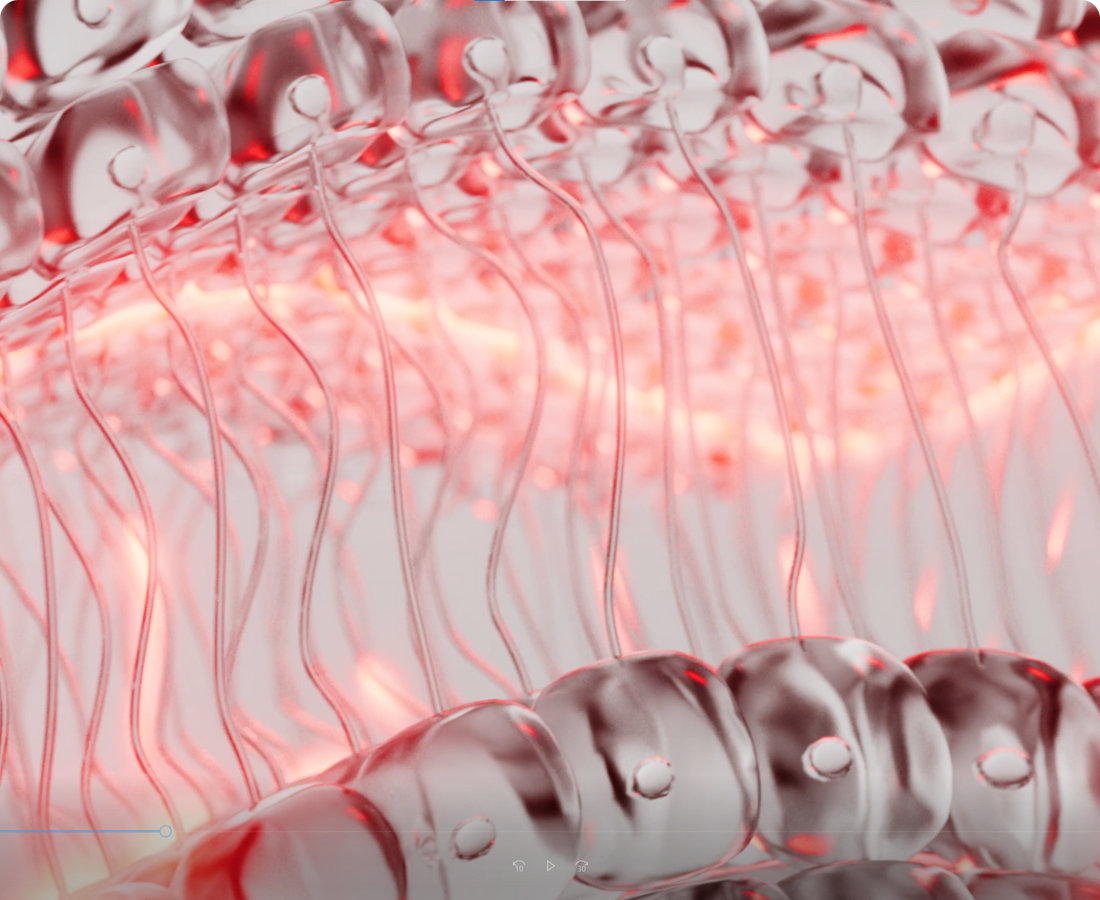
01 Red and near-infrared light are absorbed by cytochrome c oxidase (CCO), a vital protein in your mitochondria that drives cellular energy production.
02 This absorption triggers increased ATP production, activating the electron transport chain to transform oxygen and nutrients into cellular energy.
03 The rise in ATP enhances cellular signals that stimulate collagen production, reduce inflammation, and support overall skin health.

Science-Backed Benefits of Different Wavelengths

Nutrofuels’ product technology is backed by extensive scientific research to ensure effectiveness.

Blue
415–480nm
Green
530–565nm
Yellow
585–605nm
Red
630–660nm
Near-Infrared
830–880nm
Deep Infrared
1064nm
+
+
+
+
+
Blue
415–480nm
Green
530–565nm
Yellow
585–605nm
+
+
Red
630–660nm
Near-Infrared
830–880nm
Deep Infrared
1064nm
+
+
+

Blue Wavelength 415–480nm

Reference

Blue light primarily works at the skin’s surface and is widely used in dermatology for acne-prone, oilier skin types. Studies show that it can:

  • Target and destroy acne-causing bacteria
  • Help normalize excess oil production
  • Soothe active breakouts and visible redness

When blue light activates natural porphyrins inside C. acnes bacteria, it creates reactive oxygen species that clear these bacteria without harsh topical agents. At the same time it helps quiet inflammation and rebalance sebum, helping to keep pores from clogging again. Combined with red light, it can further support faster, calmer recovery.

1. Blue (415 nm) and red (660 nm) LED phototherapy in the management of acne vulgaris.
Papageorgiou P, Katsambas A, Chu A.
Br J Dermatol. 2000; 142(5): 973–978.
2. Clearance of Propionibacterium acnes using endogenous porphyrins and high-intensity blue light.
Ashkenazi H, Malik Z, Harth Y, Nitzan Y.
FEMS Immunol Med Microbiol. 2003; 35(1): 17–24.
3. Home-use blue-red LED therapy for mild-to-moderate acne: randomized clinical and histologic trial.
Kwon HH, et al.
Br J Dermatol. 2013; 168(5): 1088–1094.

Green Wavelength 535–560nm

Reference

Research on green light is still developing, but available data and clinical experience suggest that it may:

  • Visibly fade dark spots and uneven pigmentation
  • Reduce surface redness and visible vessels
  • Help ease certain types of head and migraine pain

By selectively interacting with melanin and hemoglobin, green wavelengths can soften the look of hyperpigmentation, flushing and small vascular lesions. Experimental work also points to anti-inflammatory and neuromodulatory effects, which may explain its potential for calming headache-related discomfort when used consistently.

1. 532 nm laser improvement of pigmented and vascular lesions measured with VISIA analysis.
Zawodny P, Stój E, Kulig P, Skonieczna-Żydecka K, Sieńko J.
Clin Cosmet Investig Dermatol. 2022; 15: 2187–2195.
2. Overview of light-based approaches for chronic pain relief, including green wavelengths.
Xu J, Zhang H, Chen D, et al.
J Pain Res. 2024; 17: 1091–1105.
3. Green light exposure reduces inflammation and modulates synaptic potentiation in models of post-surgical pain.
Martin LF, Cheng K, et al.
J Pain. 2023; 24(3): 509–529.
4. Low-level green laser improving wound repair after CO₂ fractional laser resurfacing.
Gong C, Lu Y, Jia C, Xu N.
J Cosmet Dermatol. 2022; 21(11): 5696–5703.

Yellow Wavelength 585–605nm

Reference

Yellow light sits between green and red on the spectrum and is valued for its gentle action on sensitive, redness-prone skin. Current evidence shows that it can:

  • Calm visible redness and irritation
  • Help slow melanin production and angiogenesis
  • Soften the look of sun spots and post-blemish marks

By influencing melanocyte activity and blood vessel formation, 585–590 nm LEDs can help rebalance uneven tone while remaining comfortable on reactive skin. Used alongside other wavelengths, yellow light contributes to a brighter, more uniform complexion over time.

1. 585 nm LED photobiomodulation suppressing melanin synthesis and promoting autophagy in human melanocytes.
Li Chen, Zhongyi Xu, et al.
J Dermatol Sci. 2018; 89(1): 11–18.
2. 585 nm light-emitting diodes reducing melanogenesis via paracrine signaling from irradiated keratinocytes.
Shanglin Jin, Li Chen, et al.
J Dermatol Sci. 2020; 98(2): 102–108.
3. 590 nm LED therapy improving erythema by inhibiting angiogenesis in melasma patients.
Xiaoxi Dai, Shanglin Jin, et al.
Cells. 2022; 11(24): 3949.

Red Wavelength 630–660nm

Reference

Red light is the most widely studied beauty-focused wavelength range and is closely tied to collagen support and skin rejuvenation. Documented benefits include:

  • Stimulating collagen and elastin synthesis
  • Improving the appearance of fine lines and texture
  • Helping calm redness and inflammatory markers in the skin

By being absorbed in mitochondrial chromophores, red light boosts ATP production and cell metabolism. This supports faster repair of dermal structures, better hydration and a smoother, more radiant surface. Regular exposure at appropriate doses can visibly improve firmness with no downtime or ablation.

1. Low-level laser and LED therapy in skin: mechanisms for stimulation, healing and restoration.
Avci P, Gupta A, Sadasivam M, et al.
Semin Cutan Med Surg. 2013; 32(1): 41–52.
2. Clinical trial evaluating red and near-infrared light for wrinkles, texture and intradermal collagen density.
Wunsch A, Matuschka K.
Photomed Laser Surg. 2014; 32(2): 93–100.
3. Review of anti-inflammatory pathways activated by photobiomodulation therapy.
Hamblin MR.
AIMS Biophys. 2017; 4(3): 337–361.

Near-Infrared Wavelength 830–880nm

Reference

Near-infrared (NIR) light between 830–880 nm penetrates deeper than visible red, reaching the dermis, subcutaneous tissue and even parts of muscle.

At these depths, NIR can enhance mitochondrial performance, support collagen renewal and help accelerate recovery in injured or stressed tissues. Studies report improved wound closure, reduced inflammatory markers and potential benefits for bone and joint health. Paired with surface-focused red light, NIR provides a more complete rejuvenation and recovery profile from the outside in.

1. Red and near-infrared photobiomodulation for impaired cutaneous wound healing.
Anju Yadav, Ashseesh Gupta.
Photodermatol Photoimmunol Photomed. 2017; 33(1): 4–13.
2. Systematic review of NIR-assisted phototherapies in bone diseases and bone tissue regeneration.
Zhuang Wan, Ping Zhang, Longwei Lv, Yongsheng Zhou.
Theranostics. 2020; 10(25): 11837–11861.

Deep Infrared Wavelength 1064nm

Reference

1064 nm deep infrared penetrates even further into the dermis and subcutaneous fat layers, which is why it is frequently used in non-ablative medical laser systems.

This wavelength can stimulate robust collagen remodeling, soften deep wrinkles and scars and support long-term tone and firmness while keeping the surface of the skin intact. Its anti-inflammatory properties are also useful for redness-prone conditions such as rosacea, with a low risk of post-inflammatory pigmentation when treatment parameters are carefully controlled.

1. Assessment of skin rejuvenation in Asian patients using a non-ablative 1064-nm Nd:YAG laser.
Yohei Tanaka, Kiyoshi Matsuo, Shunsuke Yuzuriha.
Clin Cosmet Investig Dermatol. 2011; 4: 123–130.
2. Long-pulsed 1064-nm Nd:YAG improving rosacea-like lesions via collagen remodeling in mice.
Miri Kim, Jongsic Kim, et al.
Lasers Med Sci. 2018; 33(2): 393–397.
3. Combination of 532-nm and 1064-nm lasers for noninvasive rejuvenation and toning of facial skin.
Min-Wei Christine Lee.
Arch Dermatol. 2003; 139(10): 1265–1276.

Discover All the Benefits

How Red & Near-Infrared Light Can Support Your Body—from Head to Toe.

Wrinkles

Most topical skincare only treats the surface of the skin. Red light therapy works deeper, reaching the cells that power collagen, elastin, and overall skin vitality. By gently energizing these cells, light therapy helps soften the appearance of fine lines and wrinkles that form with age or repeated expression.

Through photobiomodulation, targeted wavelengths stimulate collagen production, support firmer, more elastic skin, and encourage healthy cell turnover. This helps smooth crepey or sagging areas and promotes a more refined texture over time.

Light therapy also supports micro-circulation and nutrient delivery, giving the skin a more radiant, “lit from within” look. Even though we’re exposed to daily environmental stressors, the skin can still respond positively to consistent red and near-infrared light.

Reference

  1. Avci P, Gupta A, Sadasivam M, Vecchio D, Pam Z, Pam N, Hamblin MR. Low-level light therapy in dermatology: stimulating, healing, restoring. Semin Cutan Med Surg. 2013 Mar;32(1):41-52.
  2. Lee SY, Park KH, Choi JW, et al. Split-face clinical trial of LED phototherapy for skin rejuvenation. J Photochem Photobiol B. 2007;88(1):51-67.
  3. Nam CH, Park BC, Kim MH, Choi EH, Hong SP. Safety and efficacy of 660 nm and 411–777 nm LED devices for wrinkles. Dermatol Surg. 2017 Mar;43(3):371-380.
  4. Couturaud V, Le Fur M, Pelletier M, Granotier F. Reversing visible skin aging with red light photobiomodulation. Skin Res Technol. 2023 Jul;29(7):e13391.
  5. Mineroff J, Austin E, Feit E, Hoa A, Lowe B, Marson J, Mojeski J, Wechter T, Nguyen JK, Jagdeo J. Male facial rejuvenation using 633, 830, 1072 nm LED mask. Arch Dermatol Res. 2023 Nov;315(9):2605-2611.
  6. Wunsch A, Matuschka K. Controlled trial on red and NIR LED light for fine lines and collagen density. Photomed Laser Surg. 2014 Feb;32(2):93-100.

Acne

Breakouts often stem from excess oil, clogged pores, and acne-causing bacteria. While prescription treatments can help, they may also cause dryness, irritation, or antibiotic resistance. Light therapy offers a gentle, non-invasive option that targets acne without harsh side effects.

Blue light helps reduce acne-causing bacteria on the skin’s surface, while red light works deeper, calming redness and supporting repair of irritated tissue. Together, these wavelengths help minimize active breakouts and support a clearer, more even complexion.

Because light therapy does not rely on chemicals or medications, it can be a supportive choice for many skin types, including sensitive or easily reactive skin, when used as part of a consistent routine.

Reference

  1. Lee SY, You CE, Park MY. Blue and red LED phototherapy for acne vulgaris. Lasers Surg Med. 2007 Feb;39(2):180-8.
  2. Diogo MLG, Campos TM, Fonseca ESR, Pavani C, et al. Effect of blue light on acne vulgaris: a systematic review. Sensors (Basel). 2021 Oct 19;21(20):6943.
  3. Liu LH, Fan X, An YX, Zhang J, Wang CM, Yang RY. Randomized trial of three phototherapy methods for acne. Photodermatol Photoimmunol Photomed. 2014 Oct;30(5):246-53.
  4. Glass GE. Clinical applications of low-level light therapy. Aesthet Surg J. 2021 May 18;41(6):723-738.
  5. Stehlik P, Clark J, Zhang D, Yang Z, Hoffmann T, Mar CD, Glasziou P. Blue-light therapy for acne: systematic review and meta-analysis. Ann Fam Med. 2019 Nov;17(6):545-553.

Wound Healing

Normal wound repair requires controlled inflammation, new cell growth, and tissue remodeling. Red and near-infrared light support this process by increasing cellular energy, encouraging new blood vessel formation, and promoting better circulation so oxygen and nutrients can reach the affected area.

Light therapy has also been shown to support collagen production, which is vital for strong, resilient tissue and healthy scar formation. By helping tissues repair more efficiently, light therapy can be a valuable adjunct for wound management protocols.

Reference

  1. Chaves MEDA, Araújo AR, Piancastelli ACC, et al. Effects of low-power light therapy on wound healing. An Bras Dermatol. 2014;89(4):616-623.
  2. Bolton LL. Wound phototherapy: principles and practice. Wounds. 2020 Sep;32(9):262-264.
  3. Glass GE. Clinical applications of low-level light therapy in wound healing. Aesthet Surg J. 2021 May 18;41(6):723-738.
  4. Trelles MA, Allones I. LED therapy and post-surgical wound healing. J Cosmet Laser Ther. 2006 Apr;8(1):39-42.
  5. Soliman J, Elsanadi R, Messele F, Kelly KM. Combined red, blue, and NIR LED therapy on fractional resurfacing wounds. Lasers Med Sci. 2024 Mar 27;39(1):94.
  6. Thien TT, Nam ND, Lee TH, Shin H, Lee HJ, Chae K, Kim MJ, Jo DS, Cho SM. Merged red and NIR sources for diabetic wound healing. ACS Appl Mater Interfaces. 2025 Jan 29;17(4):5771-5783.

Inflammation

Inflammation is the body’s built-in defense against injury or infection, but when it becomes excessive or chronic it can contribute to pain, tissue damage, and premature aging. Red light therapy helps modulate, rather than completely shut down, this response.

At the cellular level, light therapy can reduce pro-inflammatory mediators, support the clearance of oxidative byproducts, and make cells less reactive to inflammatory triggers. This combination encourages a more balanced healing environment.

Because inflammation is closely linked to immune activity, red and near-infrared light may also help normalize immune responses in targeted areas. This makes light therapy a promising complementary approach for both short-term flare-ups and long-standing inflammatory issues.

Reference

  1. Hamblin MR. Mechanisms and applications of the anti-inflammatory effects of photobiomodulation. AIMS Biophys. 2017;4(3):337-361.
  2. Aguida B, Pooam M, Ahmad M, Jourdan N. Infrared light therapy for hyper-inflammation. Commun Integr Biol. 2021 Sep 15;14(1):200-211.
  3. Wickenheisser VA, Zywert EM, Rabjohns EL, Boone LH, Lawrence DS, Tarrant TK. Laser light in inflammatory and autoimmune disease. Curr Allergy Asthma Rep. 2019 Jul;19(8):37.
  4. Greben AI, Eremin PS, Kostromina EY, Markov PA, Greben TN, Gilmutdinova IR, Konchugova TV. Low-level laser therapy and molecular mechanisms in inflammatory conditions. Vopr Kurortol Fizioter Lech Fiz Kult. 2023;100(2):61-68.
  5. Walski T, Dąbrowska K, Drohmiercka A, et al. Red-to-near-infrared irradiation in inflammatory processes. Int J Radiat Biol. 2019 Sep;95(9):1326-1336.

Pigmentation

Dark spots and uneven tone—such as melasma, post-acne marks, and sun spots—often arise from excess melanin, oxidative stress, and sluggish cell turnover. When pigment-producing cells are overactive, the skin struggles to maintain an even complexion.

Blue light can help temper melanocyte activity and influence tyrosinase, a key enzyme in melanin formation. Red and near-infrared light support healthy mitochondrial function, improve circulation, and assist with cellular clean-up processes that remove excess pigment over time.

By pairing light therapy with daily sun protection and a gentle skincare routine, many people experience a smoother, more balanced look to their skin tone.

Reference

  1. Garg S, Vashisht KR, Makadia S. Prospective comparative study on melasma lasers. Cosmet Laser Ther. 2019 Aug;21(5):297-307.
  2. Lai D, Zhou S, Cheng S, Liu H, Cui Y. Laser therapy in melasma: systematic review and meta-analysis. Lasers Med Sci. 2022 Jun;37(4):2099-2110.
  3. Dai X, Jin S, Xuan Y, Yang Y, Lu X, Wang G, Chen L, Xiang L, Zhang C. 590 nm LED and angiogenesis in melasma. Cells. 2022 Dec 7;11(24):3949.
  4. Chen L, Xu Z, Jiang M, et al. 585 nm photomodulation reducing melanin synthesis and inducing autophagy. J Dermatol Sci. 2018 Jan;89(1):11-18.
  5. Oh CT, Kwon TR, Choi EJ, Kim SR, Seok J, Mun SK, Yoo KH, Choi YS, Choi SY, Kim BJ. 660 nm LED effects on melanocytes in vitro and in vivo. Photodermatol Photoimmunol Photomed. 2017 Jan;33(1):49-57.

Pain Relief

Pain can be driven by many different issues—from overuse and injury to chronic conditions. Traditional options like medication or injections may help, but often come with side effects or limited long-term use. Light therapy offers a non-drug, non-invasive way to support the body’s natural pain-relief pathways.

Research suggests that specific light wavelengths can influence neurotransmitter release, ease pain-signaling activity, and promote circulation in targeted areas. This can help deliver oxygen and nutrients more efficiently, remove waste products, and reduce inflammation-related discomfort.

Because it can be used repeatedly without systemic side effects, light therapy is a promising complementary option for both occasional flare-ups and ongoing joint or muscle soreness.

Reference

  1. De Oliveira MF, Johnson DS, Demchuk T, Tomazoni SS, Leal-Junior EC. Low-intensity laser and LED therapy for musculoskeletal pain. Eur J Phys Rehabil Med. 2022 Apr;58(2):282-289.
  2. Yeh SW, Hong CH, Shih MC, Tam KW, Huang YH, Kuan YC. Low-level laser therapy for fibromyalgia: systematic review & meta-analysis. Pain Physician. 2019 May;22(3):241-254.
  3. Zhang WW, Wang XY, Chu YX, Wang YQ. LED phototherapy: mechanisms of pain relief. Lasers Med Sci. 2022 Jul;37(5):2443-2452.
  4. Haslerud S, Magnussen LH, Joensen J, Lopes-Martins RA, Bjordal JM. Low-level laser therapy for shoulder tendinopathy. Physiother Res Int. 2015 Jun;20(2):108-25.
  5. Tang D, Liu C, Chen X, Lv X, Yuan L, Luo D, Song H. 810 nm diode laser for chronic wound and pain in daily life. Wound Repair Regen. 2023 Mar;31(2):227-232.

Body Contour

Sustainable body shaping is built on smart nutrition and movement, but targeted light may help support those efforts. Red light therapy has been studied for its potential to influence fat cell biology and metabolic activity in areas where it’s applied.

By affecting the membranes of fat cells, certain wavelengths can help release stored contents, which the body can then process and eliminate through normal metabolic pathways. Combined with regular exercise and a balanced lifestyle, this may contribute to a more refined silhouette over time.

Because light therapy is non-invasive and does not rely on heat or cutting, it’s often used as a gentle complement to traditional weight-management routines rather than a replacement for them.

Reference

  1. Avci P, Nyame TT, Gupta GK, et al. Low-level laser therapy for fat layer reduction: comprehensive review. Lasers Surg Med. 2013 Aug;45(8):349-57.
  2. Caruso-Davis MK, Guillot TS, Podichetty VK, Mashalir N, Dhurandhar NV, Dubuisson O, Yu Y, Greenway FL. LLLT for body contouring and spot fat reduction. Obes Surg. 2011 Jun;21(6):722-9.
  3. Nestor MS, Newburger J, Zarraga MB. Body contouring with 635-nm low-level laser therapy. Semin Cutan Med Surg. 2013 Mar;32(1):35-40.
  4. McRae E, Boris J. Non-invasive thigh contouring with 635 nm laser. Lasers Surg Med. 2013 Jan;45(1):1-7.
  5. Jackson RF, Roche GC, Shanks SC. Randomized trial on LLLT and cellulite appearance. Lasers Surg Med. 2013 Mar;45(3):141-7.

Hair Growth

Thinning hair and hair loss affect millions of people worldwide. As a non-drug approach, low-level light therapy has gained attention for its potential to stimulate follicles and support thicker, healthier-looking hair.

Red and near-infrared wavelengths can energize follicular stem cells, encourage dormant follicles to re-enter the growth phase, and help maintain active follicles for longer. At the same time, improved circulation brings more oxygen and nutrients to the scalp, creating a supportive environment for hair growth.

Used consistently over time, light therapy can be a useful complement to other hair-care routines for those looking for drug-free options.

Reference

  1. Avci P, Gupta GK, Clark J, Wikonkal N, Hamblin MR. Low-level laser (light) therapy for hair loss. Lasers Surg Med. 2014 Feb;46(2):144-51.
  2. Kim JH, Son HS, Yu DA, Choe YB, Lee YW. Low-level light therapy for scalp condition and growth. Indian J Dermatol. 2023 Jul-Aug;68(4):487.
  3. Pillai JK, Mysore V. Role of LLLT in androgenetic alopecia. J Cutan Aesthet Surg. 2021 Oct-Dec;14(4):385-391.
  4. Tantiyavarong J, Charoensukris S, Meephansan J, Hanvivatthanakul S, Rayanasukha Y, Boonkoom T, Tantisirrontham K. Red and green LED therapy in androgenetic alopecia. Photodermatol Photoimmunol Photomed. 2024 Nov;40(6):e13004.
  5. Afifi L, Maranda EL, Zarei M, Delcanto GM, Falto-Aizpurua L, Kluijthout WP, Jimenez JJ. LLLT as a treatment for androgenetic alopecia. Lasers Surg Med. 2017 Jan;49(1):27-39.
  6. Mai-Yi Fan S, Cheng YP, Lee MY, Lin SJ, Chiu HY. Efficacy and safety of LLLT cap device. Dermatol Surg. 2018 Nov;44(11):1411-1420.

Sleep and Depression

Sleep and mood are tightly connected. Ongoing sleep disruption can raise the risk of low mood, while poor mood can make it harder to fall and stay asleep. Light exposure is one of the main signals that helps keep these rhythms on track.

Morning light helps suppress nighttime melatonin and promote daytime alertness, while appropriate evening routines support melatonin release and deeper sleep. Certain light protocols have also been studied for their ability to support people with seasonal mood changes and other mood-related concerns.

When used thoughtfully alongside healthy habits and professional care when needed, light-based approaches can be a useful tool for supporting both restorative sleep and emotional well-being.

Reference

  1. Tseng PT, Chen YW, Tu KY, Chung W, Wang HY, Wu CK, Lin PY. Light therapy in bipolar depression: meta-analytic study. Eur Neuropsychopharmacol. 2016 Jun;26(6):1037-47.
  2. Lam RW, Teng MY, Jung YE, Evans YC, Gottlieb JF, Chakrabarty T, Michalak EE, Murphy JK, Yatham LN, Sit DK. Light therapy for bipolar depression: systematic review & meta-analysis. Can J Psychiatry. 2020 May;65(5):290-300.
  3. Li X, Fang L, Guan L, Zhang J, Zheng M, Zhu D. Light therapy and sleep in pregnancy & postpartum: systematic review. Brain Behav. 2023 Dec;13(12):e3399.
  4. Aini N, Chen R, Chu C, Chang CY, Lin HC, Jen HJ, Liu D, Lee TY, Chou KR. Light therapy, sleep, and neuropsychiatric health in dementia. Am J Geriatr Psychiatry. 2024 Jun;32(6):681-706.
  5. Lin F, Su Y, Weng Y, Lin X, Weng H, Cai G, Cai G. Bright-light therapy for sleep and depression in Parkinson’s disease. Sleep Med. 2021 Jul;83:280-289.
  6. Costello A, Linning-Duffy K, Vandenbroeck C, Donohue K, O’Hara BF, Kim A, Lonstein JS, Yan L. Light exposure, circadian rhythms, and mood in animal models. J Affect Disord. 2023 Jul 1;332:299-308.