
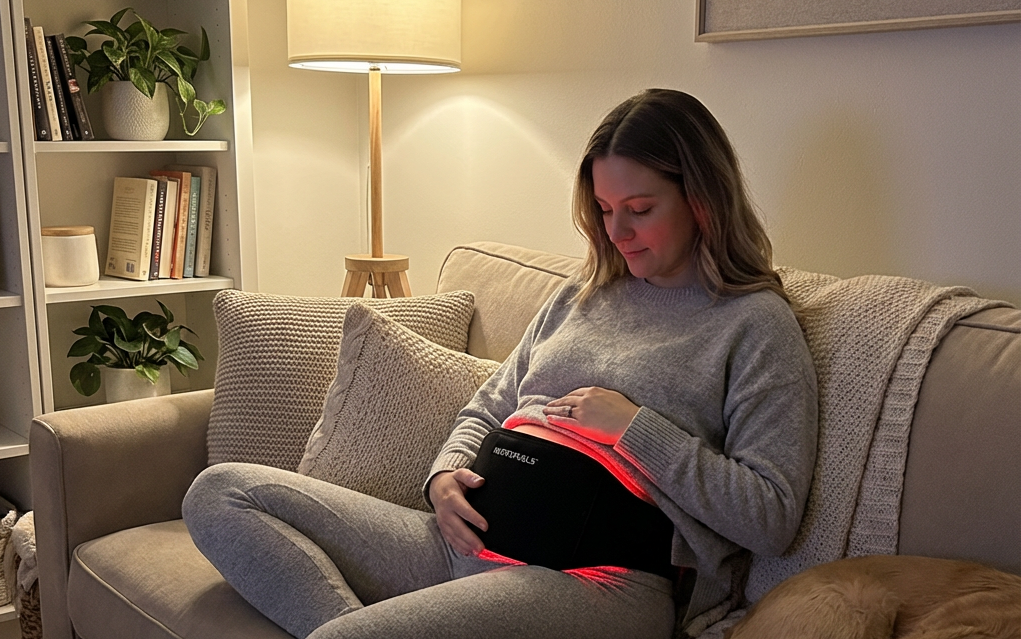
A Medical-Professional Guide to How It Works, What It Does, and Why a Red Light Belt Makes It Practical at Home
Red light therapy has become one of the most talked-about skin treatments in modern wellness.
Not because it’s trendy.
But because it addresses how skin actually repairs itself—at the cellular level.
If you’ve seen red light therapy mentioned for:
-
Skin tightening
-
Collagen production
-
Wrinkles or crepey skin
-
Stretch marks and scars
-
Postpartum skin recovery
You’re not alone.
The real question is:
What is red light therapy for the skin—and does it really work outside of clinics?
This guide gives you a clear, science-backed explanation, rewritten specifically for people considering at-home skin treatment with a Red Light Belt, like the Nutrofuels™ Red Light Belt.
What Is Red Light Therapy?
Red light therapy—also known as photobiomodulation—is a non-invasive treatment that uses specific wavelengths of light to support cellular function.
For skin applications, the most studied wavelengths are:
-
Red light (around 660 nm)
-
Near-infrared light (around 850 nm)
Unlike UV light:
-
It does not burn or damage skin
-
It does not cause pigmentation
-
It does not exfoliate or resurface
Instead, it penetrates into the skin and underlying tissue to support repair and regeneration.
How Red Light Therapy Works on the Skin (Simple Biology)
To understand what red light therapy does for the skin, you need to understand mitochondria.
Mitochondria are the energy producers inside your cells.
Skin cells rely on them to:
-
Produce collagen and elastin
-
Repair damage
-
Maintain thickness and resilience
Over time—due to aging, pregnancy, inflammation, or stress—mitochondrial efficiency declines.
Red light therapy helps by:
-
Improving mitochondrial efficiency
-
Increasing ATP (cellular energy) production
-
Reducing oxidative stress
-
Improving blood flow and oxygen delivery
More cellular energy = better skin repair.
This is why red light therapy supports skin from the inside out, not the surface.
What Red Light Therapy Does for the Skin (Real Benefits)
Red light therapy doesn’t “tighten” skin like a cosmetic procedure.
Instead, it restores the biological conditions that allow skin to remodel naturally.
Here are the most relevant skin benefits.
1. Supports Collagen Production
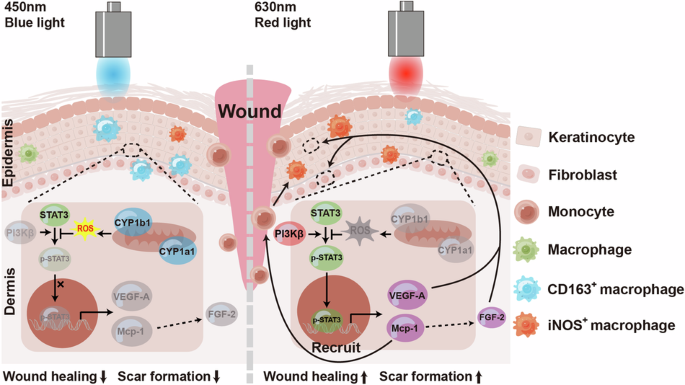
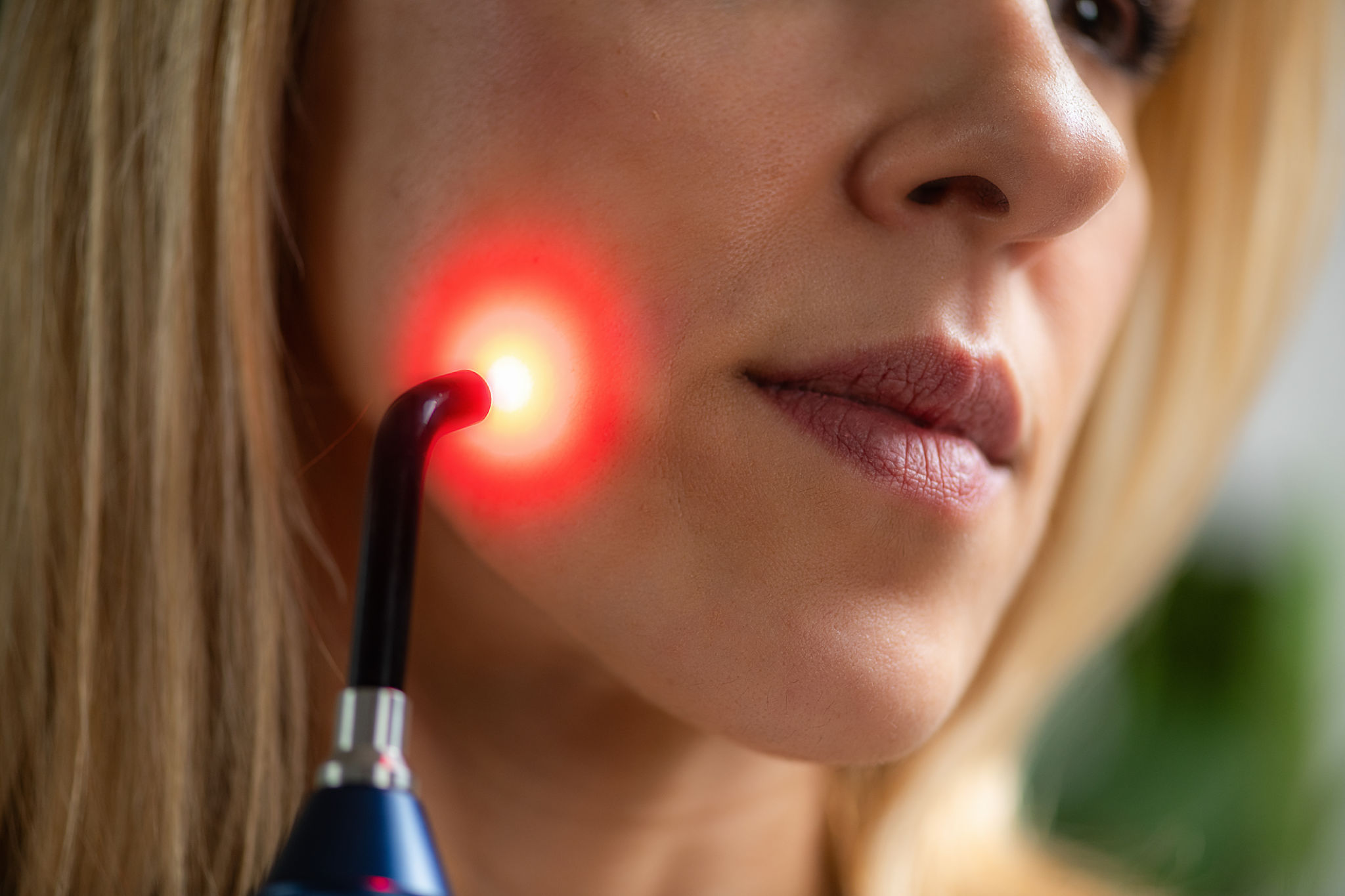
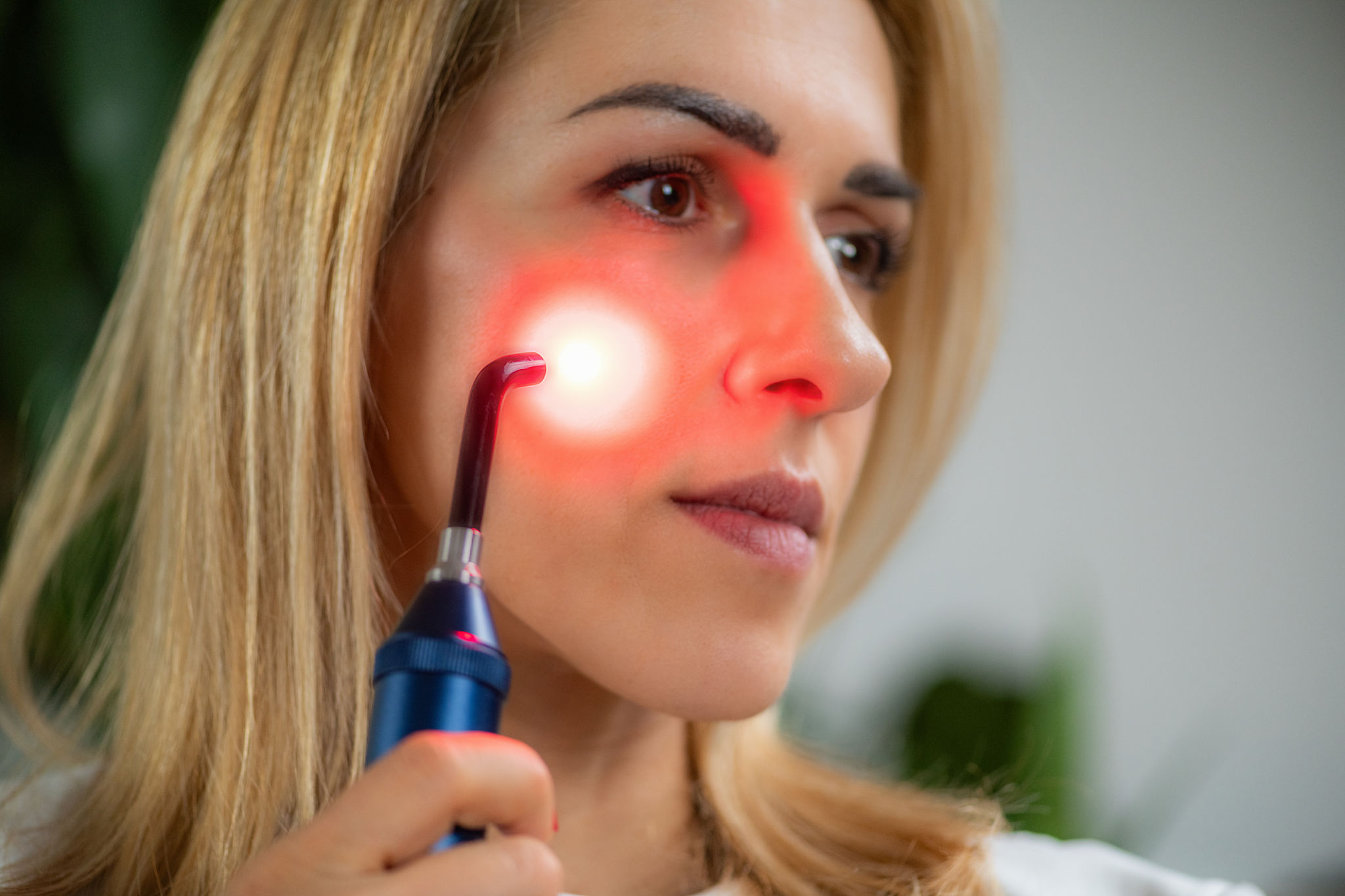
Collagen is the structural protein that gives skin firmness and support.
Red light therapy has been shown to:
-
Stimulate fibroblasts (collagen-producing cells)
-
Support collagen and elastin synthesis
-
Improve dermal thickness over time
This makes it useful for:
-
Loose skin
-
Crepey texture
-
Postpartum skin laxity
-
Early signs of aging
2. Improves Skin Elasticity
Elasticity depends on:
-
Collagen structure
-
Elastin integrity
-
Adequate circulation
Red and near-infrared light help by:
-
Improving blood flow to the dermis
-
Supporting tissue remodeling
-
Reducing inflammatory interference
Over time, skin can feel:
-
Firmer
-
Less fragile
-
More resilient
3. Helps Reduce the Appearance of Fine Lines
Fine lines form when:
-
Collagen production slows
-
Skin thins
-
Repair cycles become inefficient
Red light therapy doesn’t “erase” lines, but it can:
-
Improve skin density
-
Support smoother texture
-
Reduce the depth and appearance of lines over time
This is a gradual, cumulative process, not an overnight change.
4. Supports Scar and Stretch Mark Remodeling
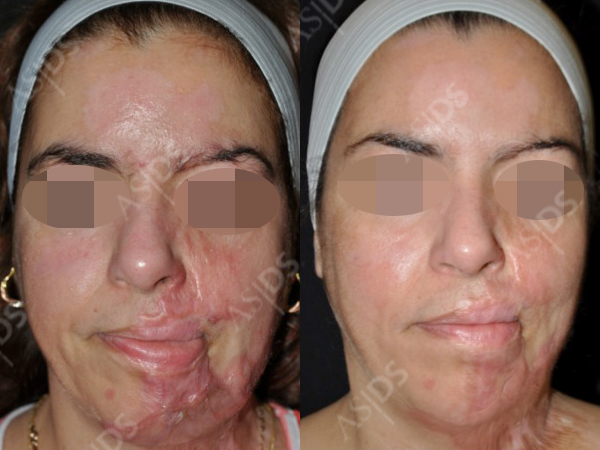
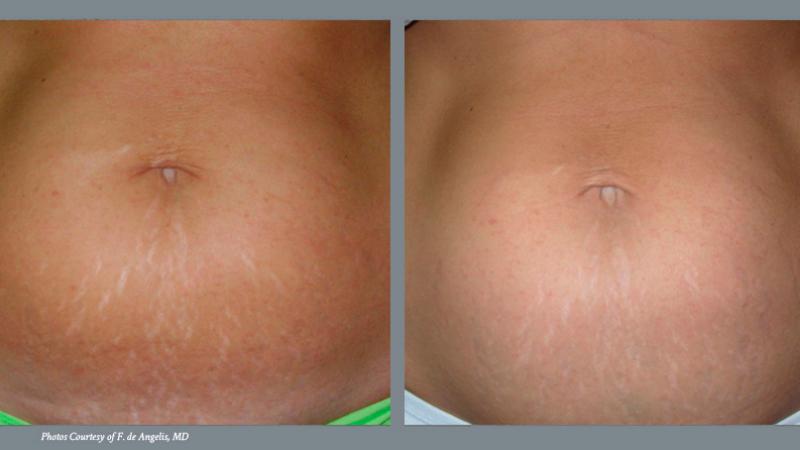
Scars and stretch marks are forms of disrupted collagen structure.
Red light therapy may help by:
-
Improving circulation in damaged tissue
-
Supporting collagen reorganization
-
Reducing stiffness and discoloration
This makes it especially popular for:
-
Postpartum stretch marks
-
C-section scars
-
Surgical or injury-related scarring
5. Reduces Chronic Inflammation in the Skin
Inflammation interferes with skin repair.
Red light therapy helps by:
-
Modulating inflammatory cytokines
-
Reducing oxidative stress
-
Supporting a healthier healing environment
Lower inflammation allows collagen remodeling to continue.
What Red Light Therapy Does NOT Do
It’s important to set realistic expectations.
Red light therapy:
-
Does not resurface skin like lasers
-
Does not peel or exfoliate
-
Does not replace injectables or surgery
-
Does not work instantly
It is a biological support tool, not a cosmetic shortcut.
Why Red Light Therapy Works Best When Applied Consistently
Skin remodeling takes time.
Collagen turnover happens over weeks to months, not days.
Red light therapy works best when:
-
Used regularly
-
Applied to the same area
-
Delivered efficiently to the skin
This is where delivery method matters.
Red Light Panels vs Wearable Devices for Skin
Red light panels:
-
Deliver light from a distance
-
Lose intensity as distance increases
-
Require setup and space
-
Are harder to use daily
Wearable devices like a Red Light Belt:
-
Maintain direct skin contact
-
Deliver light more efficiently
-
Encourage consistent daily use
-
Are practical for real life
Consistency is the biggest driver of visible results.
Why a Red Light Belt Makes Sense for Skin Treatment
A Red Light Belt is especially effective for skin because it:
-
Wraps directly against the skin
-
Provides even LED coverage
-
Targets one area at a time
-
Allows hands-free use
This is ideal for:
-
Abdomen and waist skin
-
Postpartum skin recovery
-
Hips, thighs, or lower back
-
Areas where panels are awkward
Why the Nutrofuels™ Red Light Belt Is Designed for Skin Health

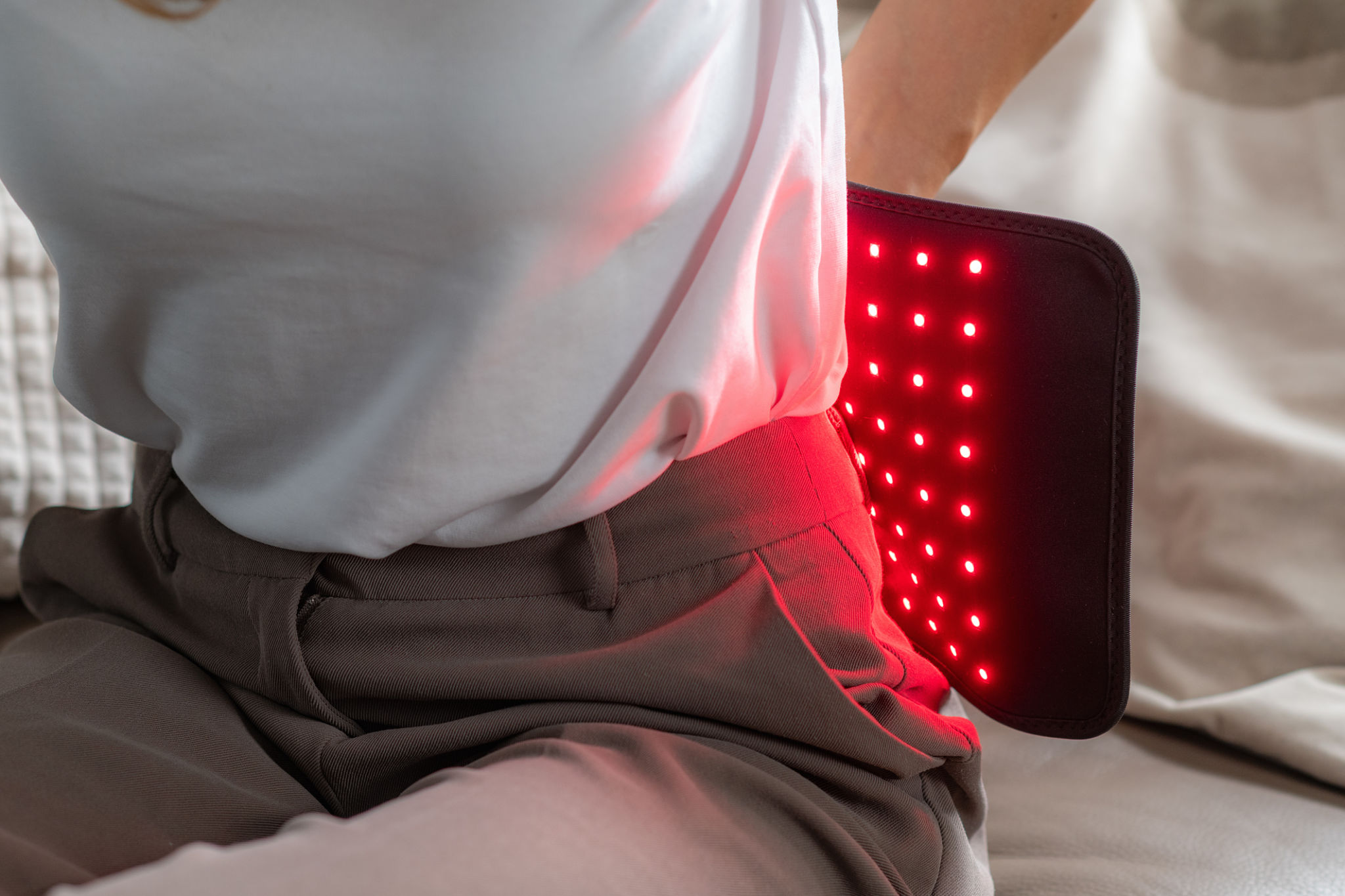
It features:
-
Medical-grade 660nm red light for collagen stimulation
-
Deep-penetrating 850nm near-infrared light for circulation and energy
-
Full, even LED coverage
-
A flexible, wearable, non-compressive design
Instead of standing in front of a device, you simply wear it consistently.
👉 View the Nutrofuels™ Red Light Belt here:
https://nutrofuels.com/products/red-light-belt
How to Use Red Light Therapy for the Skin at Home
Best-practice guidelines:
-
20–30 minutes per session
-
Daily or 5–6 times per week
-
Direct skin contact or thin clothing
-
Same placement each session
What most users notice first:
-
Improved skin feel and comfort
-
Less tightness or fragility
-
Gradual firmness over weeks
Visible changes follow internal improvements.
Who Is Red Light Therapy for the Skin Best Suited For?
Red light therapy is well-suited for:
-
People with loose or thinning skin
-
Postpartum women
-
Individuals with stretch marks or scars
-
Anyone wanting non-invasive skin support
-
Those who prefer at-home treatments
It’s not about perfection—it’s about supporting skin health long term.
Safety Considerations
Red light therapy is generally well tolerated.
Basic guidelines:
-
Avoid use on open wounds unless advised
-
Avoid direct eye exposure
-
Follow recommended session times
-
Consult a healthcare provider if pregnant or post-surgery
Final Takeaway: What Is Red Light Therapy for the Skin?
Red light therapy supports skin by:
-
Improving cellular energy
-
Stimulating collagen production
-
Enhancing circulation
-
Reducing inflammatory interference
It doesn’t force results—it allows skin to repair itself more efficiently.
And for at-home use, a Red Light Belt is one of the most practical ways to apply red light therapy consistently, which is what actually drives results.
If you’re looking for a science-backed, non-invasive way to support skin firmness, elasticity, and recovery, the Nutrofuels™ Red Light Belt is built for exactly that purpose.
👉 Explore the Nutrofuels™ Red Light Belt now:
https://nutrofuels.com/products/red-light-belt